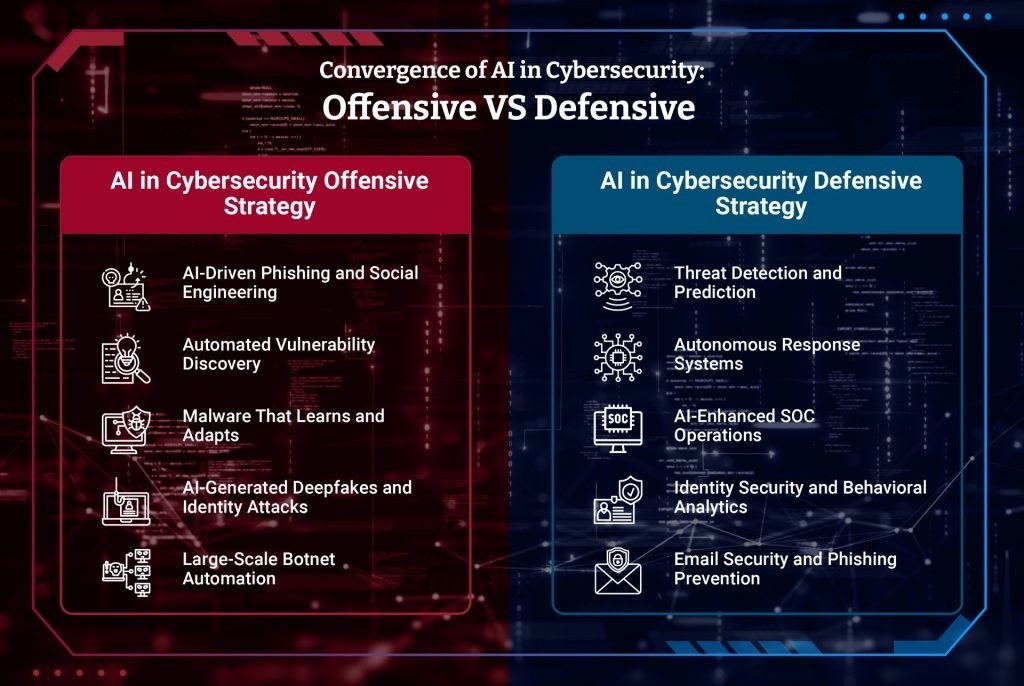
As blockchain moves deeper into finance, supply chains, and critical infrastructure, a new threat vector is emerging: AI malware blockchain attacks where adversaries use artificial intelligence to design, adapt, and deliver malware against decentralized systems. This convergence of artificial intelligence and blockchain security creates challenges that engineers must understand to protect their systems effectively.
Today's attacks are mostly AI-enabled, meaning threat actors use AI as a tool for scripting, phishing, reconnaissance, and social engineering. Fully autonomous AI-powered malware remains largely proof-of-concept, demonstrated in research labs but not yet widespread in the wild. However, the trend is clear: attackers are becoming more sophisticated, and blockchain systems with their immutable ledgers and valuable digital assets are prime targets.
Engineers working with blockchain in DeFi, cross-border payments, logistics, identity management, and critical infrastructure must now understand both blockchain security fundamentals and how AI-augmented attackers operate. This guide covers what you need to know about AI malware, the groups using it, how it exploits blockchain systems, and how to defend against it.
Who Are the Konni Hackers? A Case Study in State-Sponsored Threats
Konni hackers represent a long-running Advanced Persistent Threat (APT) cluster associated with North Korean interests. These actors specialize in espionage-focused malware, credential theft, and long-term persistence within victim networks. While public sources do not currently document Konni using AI directly, understanding their tactics helps engineers prepare for similar threats that may incorporate AI in the future.
Major nation-state groups have already adopted AI tools. Forest Blizzard (Russia), Emerald Sleet (North Korea), and Crimson Sandstorm (Iran) have documented use of large language models (LLMs) for:
Writing and refining malicious scripts
Conducting reconnaissance on targets
Generating convincing social engineering content
IBM X-Force and Microsoft report that these actors use generative AI for exploit research, scripting automation, and high-quality multilingual spear-phishing campaigns. These capabilities directly translate to blockchain environments.
Konni-style tactics : spear phishing, backdoors, credential theft, and lateral movement—are highly effective against blockchain targets. AI malware amplifies these methods, allowing attackers to:
Target exchange operators and DeFi developers with personalized phishing campaigns
Steal browser-stored secrets and wallet keys through infostealers
Position for attacks on smart contract deployers, DevOps pipelines, and bridge infrastructure
For engineers, tracking groups like the Konni hackers is essential cybersecurity for engineers practice. Understanding how APTs operate helps you anticipate attack vectors and harden your systems accordingly. A supply chain attack targeting developer tools or dependencies is a natural extension of these tactics, especially when AI automates the discovery of weak links in your infrastructure.
How AI Malware Exploits Blockchain Systems
AI malware exists at two levels, each with distinct implications for blockchain security.
AI-enabled malware involves human attackers using AI as a tool for code generation, evasion, phishing, reconnaissance, and deepfakes. This is the current reality: attackers accelerate their work with AI assistance.
AI-powered malware operates autonomously, adapting and evading without constant human control. This remains mostly proof-of-concept, but research demonstrates its potential danger.
Several capabilities make AI malware particularly threatening to blockchain systems:
Self-Learning and Adaptation
AI models can analyze how defenders respond, which nodes block traffic, how rate limits behave and adjust command-and-control patterns or payloads accordingly. This means static defenses quickly become ineffective.
Evasion of Signature-Based Tools
Large language models can continuously mutate malware code, insert obfuscation, and change indicators of compromise. Traditional signature detection becomes far less reliable when the malware changes its appearance on every execution.
Automation Across the Kill Chain
AI supports rapid reconnaissance, enumeration of exposed blockchain nodes, scanning for known smart contract vulnerabilities, and chaining them into working exploits. What once took days can now happen in minutes.
Concrete Blockchain Exploitation Scenarios
AI-Driven Smart Contract Exploits: AI models trained on public contract repositories can search for vulnerable code patterns, re-entrancy, unchecked external calls, integer overflows and automatically generate exploit transactions. This dramatically lowers the barrier for attackers.
Automated Social Engineering for Key Theft: LLMs generate highly personalized phishing messages and deepfake-driven social engineering. These attacks trick engineers, administrators, or treasury staff into revealing seed phrases, signing malicious transactions, or approving fraudulent deployments.
Consensus and Node-Level Manipulation: AI-supported bots probe for misconfigured validators or RPC endpoints, optimize front-running and MEV strategies, and attempt sybil-style participation in low-stake networks to manipulate governance or block ordering.
Even though today's AI use is mostly assistive, the net effect is more rapid, scalable, and convincing attacks against your blockchain security infrastructure. AI threat detection systems must evolve to match this pace.
The Risk of Supply Chain Attacks in Decentralized Ecosystems
A supply chain attack in blockchain contexts means compromising third-party components that developers and operators rely on. These include smart contract libraries and SDKs, wallet extensions and mobile apps, oracles and data feeds, cross-chain bridges, and CI/CD pipelines, NPM/PyPI packages, and Docker images.
AI amplifies the danger of supply chain attack vectors in several ways:
Automated Weak-Link Discovery - AI crawls public repositories, dependency graphs, and package registries to identify under-maintained contracts, outdated dependencies, or poorly audited components. Attackers find the weakest link automatically.
Malicious Package and Code Injection - LLMs help attackers quickly generate plausible "helpful" commits, documentation, or library updates that quietly introduce backdoors. These contributions look legitimate to human reviewers.
Automated Reputation and Targeting Analysis - AI profiles which libraries or oracles are widely used in DeFi protocols. Attackers prioritize the components that provide the highest impact if compromised, maximizing damage with minimal effort.
Cascading Impact - A single compromised oracle or bridge library can propagate malicious data or backdoored logic into dozens of chains and hundreds of dApps. This creates synchronized failures across organizations. Because blockchain is immutable, damage from malicious upgrades or compromised contracts is often irreversible, turning a supply chain attack into systemic risk.
For engineers, this means blockchain security must extend beyond your own code. Every dependency, every third-party integration, every piece of open-source software you use is a potential attack vector. The Konni hackers and similar groups understand this and increasingly target the software supply chain.
Blockchain Security Fundamentals for Engineers
Blockchain security fundamentals remain the best defense, even against AI-augmented threats. No amount of advanced detection can compensate for weak foundational practices.
Core Blockchain Security Principles
Immutability - Once deployed or recorded, changes are difficult or impossible to roll back. Pre-deployment review, testing, and audits are non-negotiable.
Consensus Protocols - Understanding how your chain's Proof of Work, Proof of Stake, or Byzantine Fault Tolerance consensus works is critical for assessing risks like 51% attacks, censorship, or validator collusion.
Cryptographic Keys and Wallets - Private keys, seed phrases, and HSM/secure enclave management must be treated as crown jewels. Compromise here means total loss.
Smart Contract Audits and Formal Methods - Independent audits, bug bounties, property-based tests, fuzzing, and formal verification catch flaws that AI-assisted attackers would exploit.
Why Traditional Security Falls Short
Conventional tools like firewalls, antivirus, and basic intrusion detection remain necessary but are not tuned for on-chain logic, DeFi semantics, or key-management threats. AI-assisted attackers can quickly obfuscate code, evade static signatures, and adapt network behaviors. Traditional defenses alone cannot keep pace.
Engineer-Specific Practices
Secure Smart Contract Coding - Follow well-maintained standards and battle-tested token patterns. Minimize contract complexity and external calls. Apply least-privilege patterns and implement upgradability controls carefully.
Zero-Trust Architecture - Treat every component : oracles, admin dashboards, build servers, validators—as potentially compromised. Enforce strong authentication with MFA and hardware keys. Implement rigorous access control for deployers and signers.
Decentralized Identity (DID) and Role Management - Use on-chain roles, permissions, and DIDs to manage who can upgrade contracts, rotate keys, or adjust critical parameters. Combine with off-chain identity proofing where compliance or trust is needed.
These blockchain security fundamentals directly counter AI malware by reducing attack surface, limiting damage from breaches, and making exploitation more difficult. They form the foundation of cybersecurity for engineers working with decentralized systems.
Leveraging AI Threat Detection to Counter AI-Driven Attacks
AI threat detection uses machine learning and anomaly detection to monitor blockchain transactions, network traffic, and smart contract behavior for signs of compromise. This is the defensive counterpart to offensive AI malware.
Signature-Based vs. Behavioral Detection
Signature-based detection matches known patterns, hashes, bytecode fragments, indicators of compromise. It is cheap and fast but weak against constantly mutated AI-generated malware. Attackers using LLMs can change their code faster than signatures can be updated.
Behavioral or anomaly-based detection models "normal" behavior of users, contracts, or nodes and flags deviations. This catches never-before-seen attacks, including those created by AI. It is more robust against obfuscation and code mutation but requires careful tuning to avoid false positives.
Adversarial Machine Learning Considerations
Attackers can attempt evasion by crafting behavior that looks normal, or poisoning by manipulating training data. Defenders can respond with:
Adversarial training: Training models on adversarial examples and simulated malicious behaviors
Model ensembles: Using multiple detection models to reduce single-model weaknesses
Layered detection: Combining behavioral, signature-based, and heuristic approaches
Tools and Techniques for Engineers
On-Chain Analytics : Deploy or integrate anomaly-detection services that monitor unusual token flows, sudden governance vote swings, and new contract deployments interacting with high-value protocols.
Automated Honeypots and Deception : Create smart contracts or addresses that appear attractive to attackers but are instrumented to collect TTPs and behavioral data. This intelligence feeds your AI threat detection systems.
Real-Time Monitoring Dashboards : Surface ML-driven alerts to security engineers in near real time, with context about what changed, related addresses, and past activity. This supports rapid triage and response.
Effective AI threat detection complements strong blockchain security fundamentals. Together, they create a layered defense that adversaries, even those using AI malware find difficult to penetrate.
Actionable Guidance: Cybersecurity for Engineers Working with Blockchain
Cybersecurity for engineers working with blockchain requires a practical, actionable approach. Apply these measures to harden your systems against AI malware, supply chain attack vectors, and threats from groups like the Konni hackers.
Secure Development and Deployment
Implement continuous vulnerability scanning and static analysis for smart contracts and wallet code
Integrate software composition analysis (SCA) into CI/CD to track and update dependencies; block builds with known vulnerabilities
Enforce code review and four-eyes principles for any change touching keys, signing policies, or critical contracts
Key and Wallet Security
Use multi-signature wallets for treasury and admin operations so no single key compromise is enough
Store critical keys in hardware security modules (HSMs) or hardware wallets; avoid browser-only storage
Enforce strict key rotation and revocation procedures
Human-Centric Defenses
Train teams to recognize AI-generated phishing and deepfake-style social engineering: look for context anomalies, unexpected urgency, or channel changes (sudden shift from email to messaging apps)
Require out-of-band verification : voice or video with known contacts, for any request involving key operations, deployments, or large transfers
AI-Aware Monitoring
Deploy behavioral anomaly detection around developer workstations, build systems, RPC endpoints, validators, and on-chain protocols you operate
Instrument logging so alerts can be correlated across on-chain events, infrastructure logs, and identity systems
Supply Chain Hygiene
Regularly audit third-party code (libraries, oracles, bridges) and track maintainer reputation, update frequency, and security advisories
Pin versions where possible, and test upgrades in staging networks before mainnet deployment
Threat Intelligence and Continuous Learning
Keep up with reporting on APT groups, including Konni hackers and other state-linked actors, as they evolve their AI tooling and target crypto ecosystems
Participate in information-sharing communities (ISACs, industry groups, protocol-specific security communities) to learn from real incidents
This cybersecurity for engineers checklist addresses the full spectrum of threats from AI malware to supply chain attack vectors, while leveraging AI threat detection and blockchain security fundamentals to create comprehensive protection.
Building Resilient Blockchain Systems in the Age of AI Malware
AI malware blockchain threats are emerging as attackers adopt AI to scale reconnaissance, phishing, evasion, and vulnerability discovery. Fully autonomous AI-powered malware remains rare and largely experimental, but AI-enabled attacks are already here, and they materially raise the bar for defenders.
Engineers must combine blockchain security fundamentals, sound key management, secure smart contract design, supply chain security, with advanced AI threat detection and continuous monitoring. Invest in proactive defenses, regular audits, and incident-response playbooks tailored to decentralized systems. Stay engaged with threat intelligence, academia, and the security community to track how groups like the Konni hackers and other APTs evolve their AI-driven tradecraft.
The convergence of AI malware and blockchain security presents unprecedented challenges. But with the right knowledge, tools, and practices, engineers can build systems resilient enough to withstand this new generation of threats. Your role as a defender is more critical than ever, embrace it with vigilance, continuous learning, and a commitment to security excellence.